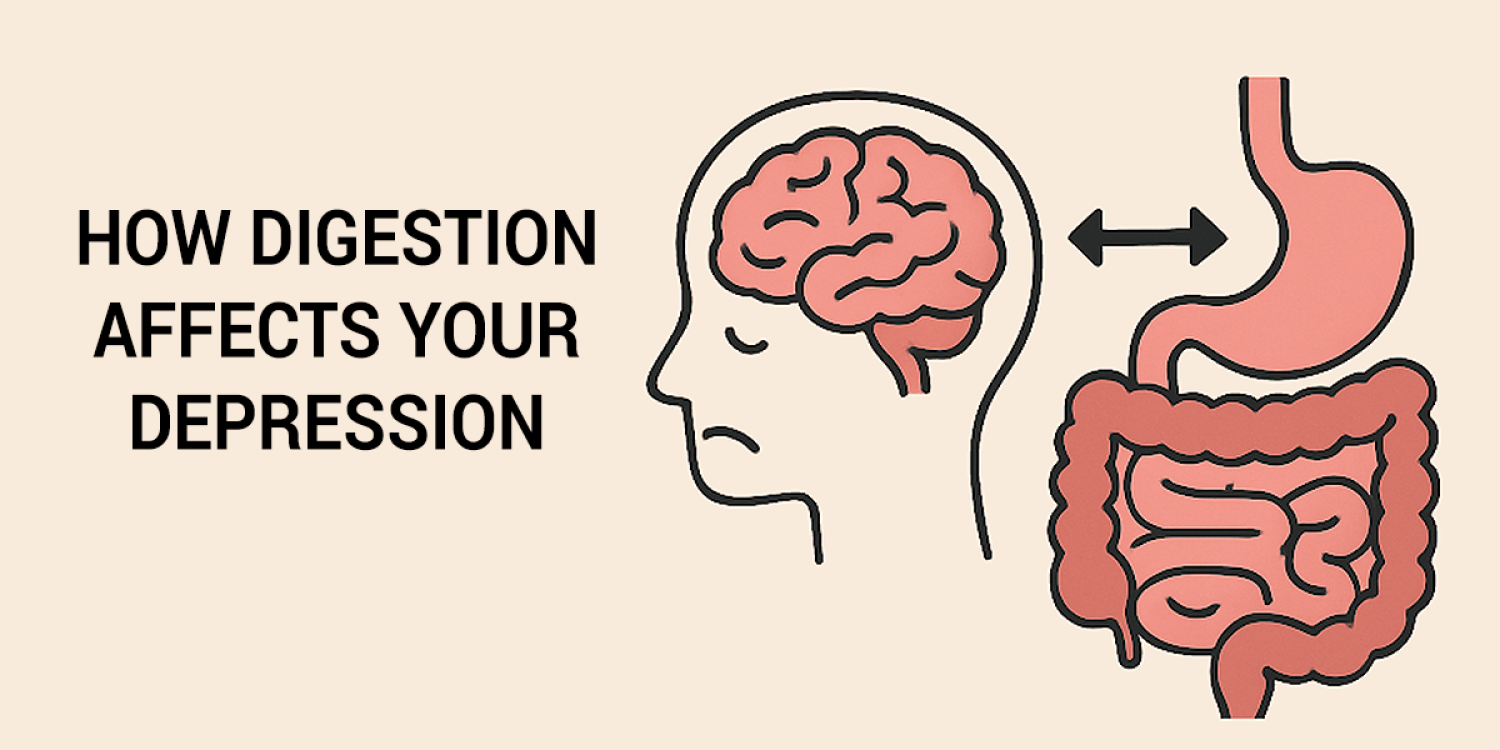
Have you ever felt low, foggy, or anxious—and also bloated, constipated, or nauseous?
It's not a coincidence.
Your brain and gut are in constant conversation, and when one struggles, the other often does too.
This powerful communication system is called the gut-brain axis—a complex network of nerves, hormones, and microbes that connect your digestive system to your mental health. And it's not just "in your head"—it's deeply physical.
Your digestive tract is lined with over 100 million nerve cells. It even produces many of the same neurotransmitters that your brain uses—especially serotonin, the chemical responsible for regulating mood, sleep, and overall sense of well-being.
In fact, around 90% of serotonin is produced in the gut, not the brain.
So, when your gut health is off—due to poor diet, chronic stress, inflammation, or antibiotic overuse—it can lead to chemical imbalances that directly impact your mood and mental clarity.
Let's break it down. Here are a few common scenarios:
If you constantly feel "off"—both mentally and physically—your digestive health might be the missing piece of the puzzle.
It's a two-way street.
When you're depressed, your appetite changes. You may overeat or undereat. Your body goes into "fight or flight" mode more often, which shuts down digestion. You may experience:
Even your gut microbiome (the good bacteria that live in your stomach and intestines) can shift due to chronic stress or emotional turmoil. An unbalanced gut microbiome has been linked to both anxiety and depression in multiple studies.
If you've ever felt like no one is taking your gut issues or mood swings seriously—know that they're deeply connected.
Mental health doesn't just live in the brain. It lives in the body, too.
And your gut, often ignored, might just be the loudest voice asking for help.
It's time we stop treating digestion and depression like two separate things.
Because healing one can help heal the other.
In today’s always-connected world, our minds rarely get a chance to breathe. Between endless notifi...
Read More
When most people hear the word psychology, they immediately think of problems—depression, anxiety, t...
Read More
We often wait for a breakdown before we talk about health. A chronic illness. A panic attack. A d...
Read More