When most people hear the word psychology, they immediately think of problems—depression, anxiety, trauma, or therapy.
But psychology wasn't always just about fixing what's broken.
Its original purpose was something far more expansive:
To understand the human mind in a way that helps people live fuller, richer, more meaningful lives.
Psychology, at its roots, was never meant only to diagnose or treat disorders.
It was about understanding how humans think, feel, and grow—how we love, learn, create, find joy, and discover purpose.
In its early years, especially in the late 1800s and early 1900s, psychology explored the full spectrum of human experience—curiosity, resilience, imagination, morality, and potential. There was genuine excitement about studying the strengths of the mind, not just its suffering.
But then, something shifted.
After World War II, the world was in crisis.
Millions of soldiers returned home psychologically shattered. Post-traumatic stress, depression, and severe anxiety were everywhere—and understandably, the field of psychology rushed to meet the urgent need for treatment.
This gave rise to what we now call the disease model of psychology—focused entirely on what's wrong, what's disordered, and what needs to be "fixed."
In that urgency, something was lost.
The goal became survival—not flourishing. And when pharmaceutical industries entered the scene, the system became even more problem-focused.
Why? Because disorders are marketable.
Treatments can be sold.
Pain can be profitable.
It wasn't until the late 1990s that a psychologist named Martin Seligman asked a simple, radical question:
What if psychology focused on what's right with people, not just what's wrong?
And with that, the movement of Positive Psychology was born.
This wasn't about ignoring pain or pretending suffering doesn't exist.
It was about completing the picture.
Because humans aren't just trauma and triggers—we're also hope, meaning, gratitude, connection, and growth.
Positive psychology brought research-backed attention to things like:
In a world still obsessed with diagnosis and dysfunction, we need Positive Psychology more than ever.
Because healing is not just the absence of pain—it's the presence of purpose.
Mental health is not just "not being depressed"—it's feeling engaged, fulfilled, connected, and alive.
It reminds us that we don't just want to survive life.
We want to enjoy it.
And that's not selfish.
That's the very heart of what psychology was meant to do all along.
In today’s always-connected world, our minds rarely get a chance to breathe. Between endless notifi...
Read More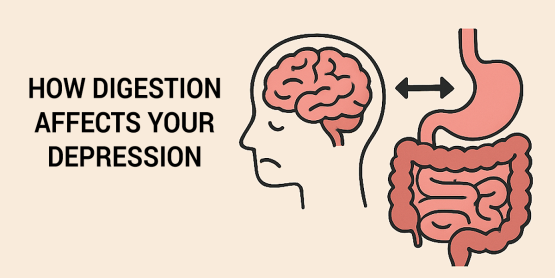
Have you ever felt low, foggy, or anxious—and also bloated, constipated, or nauseous? It’s not a co...
Read More
We often wait for a breakdown before we talk about health. A chronic illness. A panic attack. A d...
Read More